Related

November Challenge
OWN THE NEGATIVE. EARN THE POSITIVE.
The November focus is on negative training: emphasizing the eccentric, or lowering, phase of an exercise.
For martial artists eccentric strength matters because performance is not only about producing force. We also need to decelerate, absorb force, stabilize joints, control body position, and recover efficiently between movements.
For these exercises, use a slow 3-5 second lowering phase with strong posture and controlled breathing.
Negative Squats
How: Stand with feet about shoulder-width apart. Lower into the squat slowly for 3-5 seconds, then return to standing at a normal pace.
Works: Quadriceps, glutes, hamstrings, and core
Martial arts benefit: Develops lower-body control for stances, kicking, level changes, landing, and directional changes. The slow descent also reinforces knee and hip stability.
Negative Calf Raises
How: Rise onto the balls of your feet, pause briefly at the top, then lower your heels slowly for 3-5 seconds.
Works: Gastrocnemius and soleus
Martial arts benefit: Supports footwork, balance, pivots, stance transitions, and explosive movement. Eccentric calf control is also important when absorbing force through the foot and ankle.
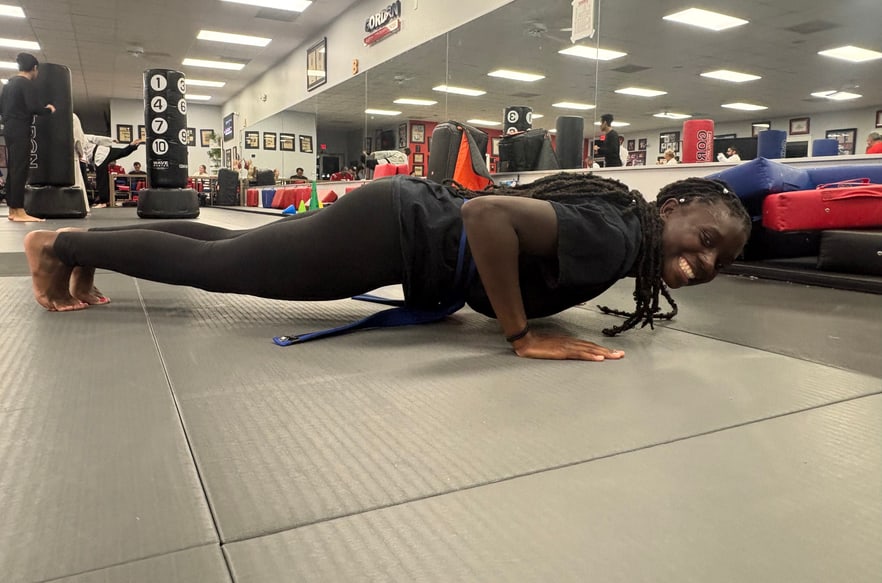
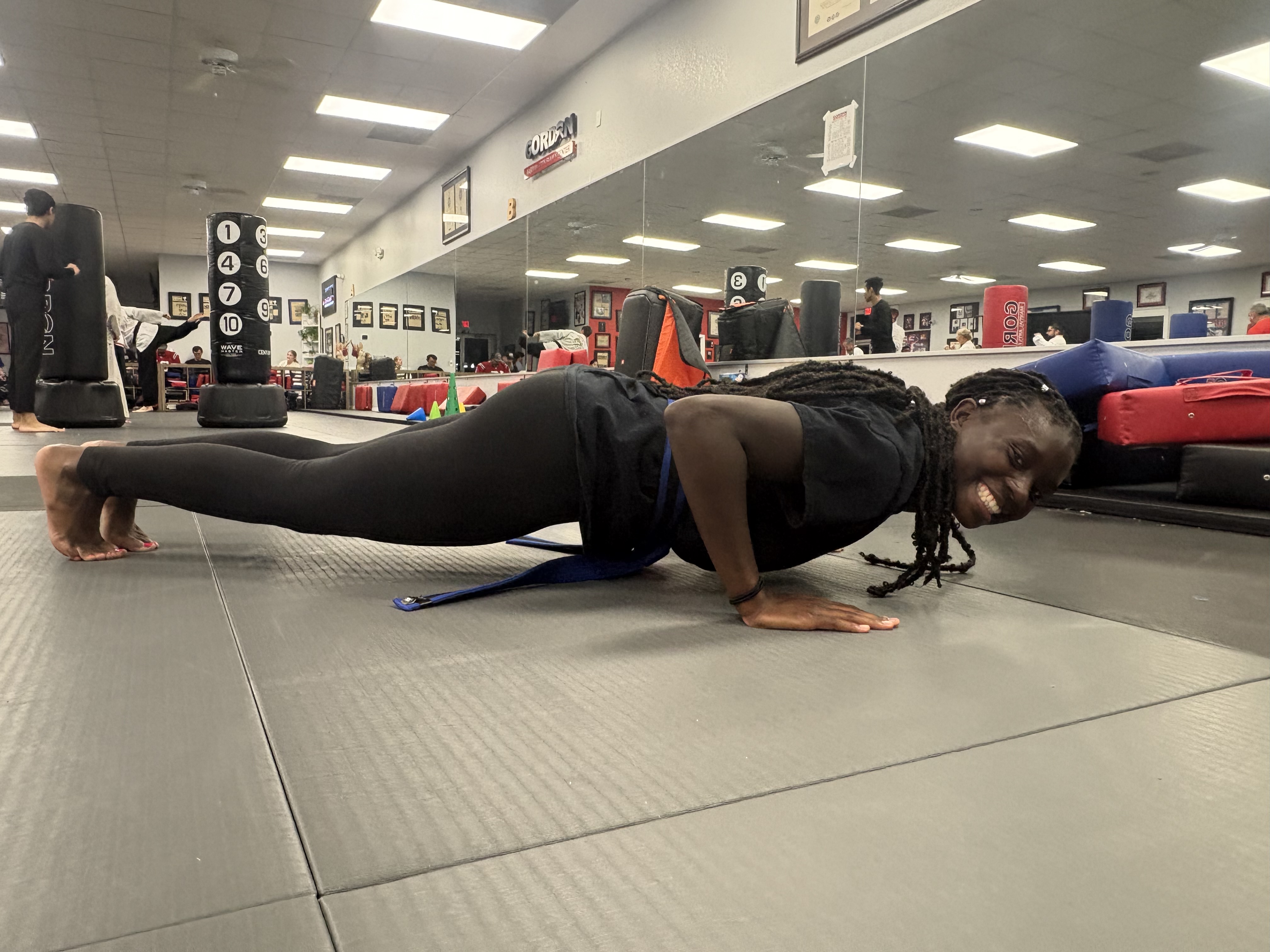
Negative Push-Ups
How: Begin in a strong plank position. Lower your body toward the floor over 3-5 seconds, keeping the body in one straight line, then press back up normally or reset as needed.
Works: Chest, anterior shoulders, triceps, and core
Martial arts benefit: Builds pushing strength and shoulder stability for striking, framing, posting, defensive movement, and getting up from the floor.
Negative Prone “W” Raises
How: Lie face down with elbows bent so the arms form a “W.” Lift the arms slightly while squeezing the shoulder blades together, pause, then lower slowly with control.
Works: Rhomboids, middle and lower trapezius, rear deltoids, and rotator cuff musculature
Martial arts benefit: Strengthens the upper back and scapular stabilizers, helping balance the large amount of forward shoulder activity created by punching and guarding. This can support posture, shoulder control, and movement quality.
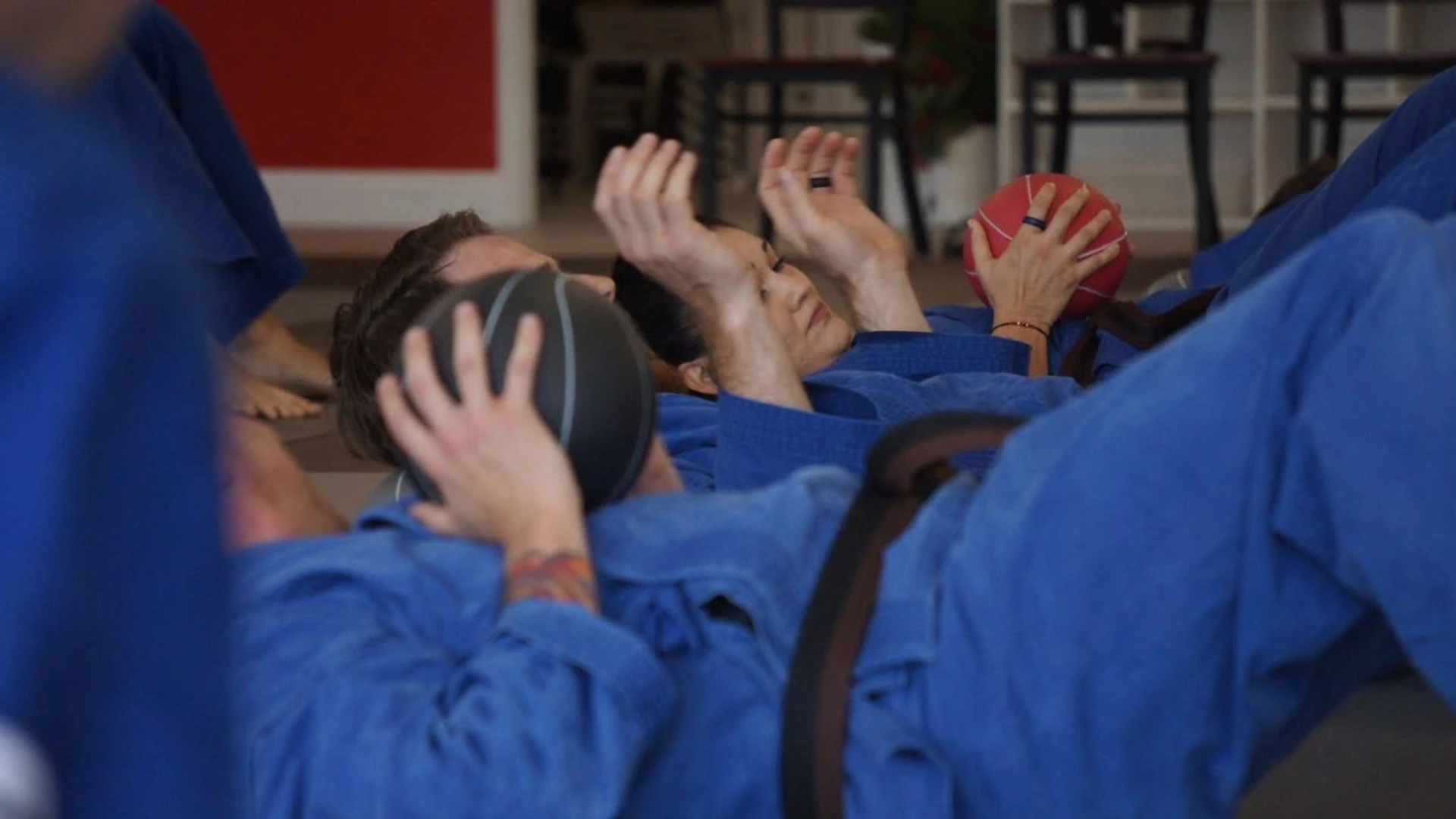
Negative Sit-Ups
How: Begin seated at the top of a sit-up. Slowly lower your torso toward the floor for 3-5 seconds, then return to the starting position normally.
Works: Rectus abdominis, obliques, and hip flexors
Martial arts benefit: Trains the core to control trunk extension rather than simply creating flexion. That control is useful for kicking, striking, falling, recovering from the floor, and resisting unwanted movement.
Negative Leg Raises
How: Lie on your back with the legs raised. Brace the core and slowly lower the legs toward the floor for 3-5 seconds without allowing the lower back to arch. Return to the top and repeat.
Works: Abdominals, hip flexors, and deep core stabilizers
Martial arts benefit: Improves pelvic control and trunk stability while the legs move, which is directly relevant to kicks, knee strikes, guard recovery, and balance.
Coaching Focus
The goal is not to move slowly just for the sake of moving slowly. The goal is to maintain tension and control through the full range of motion. Instructors should watch for loss of posture, collapsing joints, rushing through the eccentric phase, or sacrificing range for speed.
Negative training can make familiar bodyweight exercises more challenging without adding equipment, making it an easy tool for warm-ups, circuit training, and technique-focused training.
Negative November Home Challenge
3 rounds, twice per week, with a 3-5 second lowering phase on every rep. Aim for 8-10 reps per exercise.
*Prone W Raises: Lift, squeeze for 1-2 seconds, then lower slowly for 3 seconds. There isn’t really a traditional “negative rep” for this exercise.
Don’t rush the rep. Control it.
Important rule: quality over quantity.
If you aren’t able to maintain the slow tempo or good form, reduce the reps. The whole point is control.
This challenge works for beginners with modifications and can be made surprisingly hard for experienced martial artists simply by slowing the tempo.